The Power of Choice: Why Children Learn More When They Choose Their Work

Walk into an Inly classroom during the morning and you may notice something right away: the sound.
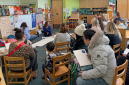
It’s not the voice of a teacher lecturing at the front of the room, and it’s not the noise of unstructured play. Instead, there is a gentle, productive hum. Children are moving around the room, working independently or with classmates, talking quietly, concentrating deeply, and making choices about what comes next.
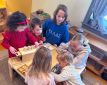
 In a Children’s House classroom, one child may be working with hands-on math materials while another writes a story. Nearby, a classmate carefully pours water, practices a practical life skill, or explores a sensorial activity. Each child is engaged in meaningful work, supported by teachers who know when to step in, when to offer a lesson, and when to give a child the space to discover something independently.
To someone unfamiliar with Montessori, this might look like free choice. But there is something much more intentional happening.
At Inly, choice is an important part of how children learn.
Why Choice Builds Engagement
When children have meaningful choices in their learning, they begin to see themselves as active participants rather than passive recipients. They learn to make decisions, manage their time, follow their interests, and take increasing ownership of their work.
That doesn’t mean children simply choose whatever they want, whenever they want. In a Montessori classroom, teachers carefully observe each child, introduce new materials and concepts at the right time, and create opportunities for children to work at an appropriate level of challenge.
The result is a learning environment that encourages intrinsic motivation. Children experience the satisfaction of mastering something new, solving a problem, completing a challenging task, or discovering an answer for themselves.
That sense of ownership can make a difference in how deeply children engage. When they are interested in what they are doing, they are more likely to persist, repeat a process, notice their own mistakes, and experience the satisfaction that comes from figuring something out.
Freedom Within Limits
One of the most common misconceptions about Montessori education is that children are simply free to do whatever they want.
In reality, Montessori classrooms are highly intentional environments. At Inly, the classroom is carefully prepared with materials and activities designed to support children’s development and invite meaningful exploration.
Teachers guide children toward work that is appropriate for their developmental stage and individual needs. Materials are introduced through lessons, and children learn how to use them respectfully, work within the expectations of the classroom community, and return them when they are finished.
This is often described as freedom within limits.
Children have meaningful choices, but those choices exist within a thoughtfully designed environment. They learn that independence comes with responsibility: choosing work, taking care of materials, managing their time, respecting others, and following through.
That balance is one of the hallmarks of Montessori education.
Choice in Action: Building Independence Through Everyday Work
Consider a young child washing a table.
At first glance, it might seem like a simple classroom chore. But a practical life activity like this can involve a surprising amount of learning.
The child gathers the necessary materials, carries water carefully, follows a sequence of steps, uses the appropriate tools, cleans the workspace, and returns everything to its proper place. Along the way, the child is developing coordination, concentration, sequencing, independence, and responsibility.
Perhaps most importantly, the child is doing something meaningful for a real purpose.
At Inly, these everyday experiences are part of a larger approach to learning that recognizes the whole child. Young children develop concentration, coordination, language, self-regulation, responsibility, and respect as they gain confidence in what they can do for themselves.
And when a child finishes one activity and chooses what to do next, they are practicing something that will serve them well far beyond the classroom: how to direct their own learning.
From Choice to Ownership
As children grow, their role in learning evolves.
In the Elementary years, students at Inly take increasing responsibility for managing their time, completing work independently, asking questions, solving problems, and pursuing their interests. They collaborate with classmates, make connections across subjects, and apply what they know to meaningful projects and real-world challenges.
Over time, students move from deciding what to work on to thinking more deeply about how they will approach a challenge, what they want to understand, and what they can contribute. They learn to set goals, make decisions, work through challenges, and reflect on their progress.
The goal is to help students become confident, curious learners who understand that they have an active role in their own education. They develop the critical-thinking skills, self-awareness, and perseverance to take ownership of their learning and the confidence to pursue it with purpose.
Try This at Home: Encouraging Choice and Independence
You don't need a Montessori classroom at home to give your child more opportunities to practice independence. A few simple changes can make everyday routines more engaging and empowering.
1. Offer Meaningful Choices
Choices work best when they are manageable and purposeful.
Instead of asking an open-ended question like, “What do you want to wear today?” try offering two appropriate options: “Would you like the blue shirt or the green one?”
As children get older, you can expand the choices. The goal is not to give children control over everything, but to give them regular opportunities to make decisions within appropriate boundaries.
2. Make Independence Easier
Look around your home from your child's perspective. Can they reach their own cup? Choose a book? Put away a game? Help prepare a snack?
A low shelf, accessible drawer, or small basket can turn a task that normally requires an adult into one a child can manage independently.
Just as a Montessori classroom is intentionally prepared for children, the home environment can be designed to make independence possible.
3. Let Mistakes Become Part of Learning
Spilled milk? A toppled block tower? A puzzle piece in the wrong place?
Whenever it is safe and appropriate, resist the urge to immediately step in and fix the problem. Instead, give your child time to notice what happened and think about what to do next.
You might simply say, “The milk spilled. What do you think we should do?”
These small moments help children develop problem-solving skills and confidence in their own ability to respond to challenges.
Preparing Children for a World of Possibilities
The power of choice isn't simply about giving children more freedom. It is about helping them develop the skills to use that freedom well.
At Inly, children gradually learn how to make decisions, manage their time, work independently and collaboratively, persist through challenges, and take responsibility for their learning and their community.
Over time, those experiences help children become the passionate thinkers, joyful learners, and confident leaders at the heart of the Inly experience.
Choice is just one part of that journey. But when children have meaningful opportunities to explore their interests, take ownership, and discover what they are capable of, learning becomes something they actively participate in rather than something that simply happens to them.
And that is the power of a student-centered education.
See Choice in Action
Curious about what student-centered, Montessori+ learning looks like in an Inly classroom? Come see it for yourself! Visit our Scituate campus, meet our teachers and students, and experience the purposeful energy of an Inly classroom firsthand.